If you’re in any doubt about the versatility of the violin, visit the Night of the Violin festival. Tim Kliphuis, violinist and curator: ‘It’s an important, wonderful instrument, which can be used for really cool things.’
From jazz to folk music, from experimental to improvisation. You’ll hear it all at the Night of the Violin, part of the Netherlands Violin Competition in TivoliVredenburg. But this instrument, which is usually associated with classical music, has several other strings to its bow. For this edition, curator Tim Kliphuis chose a crossover of cultures, genres and generations. ‘The violin is a wonderful instrument, which can be used for really cool things, most of which are largely unknown. I hope that the Night of the Violin will go some way to changing this.’
What’s the idea behind it?
‘I’m quite well up on the international music scene, as I travel a lot for my job. I see numerous guitar festivals. Every country has one, two or even three. The Netherlands has hosted the fabulous Cello Biënnale festival for the last couple of years, but for a long time, we didn’t manage to organise a violin festival to match it. This first edition of the Night of the Violin is one of very few in Europe.’
Isn’t that a bit strange?
‘Yes, it’s surprising. On the one hand, the violin is very well represented in the world of classical music: every orchestra has a solo violinist. The cello has been trying to catch up for the past twenty or thirty years. Something like: we’re a nice instrument in the orchestra too. But the violin has always had a higher status and receives preferential treatment. On the other hand, we’ve never been able to showcase the versatility of the instrument outside the world of classical music. So we’re taking the opportunity of the Night of the Violin to demonstrate just how different and widespread the impact of the violin is on all the other continents. We’ve allowed ourselves to bring all those music styles together, with one thing in common: the violin.’
The violin usually plays a much bigger role in classical music than it does in other music styles, such as jazz or pop.
‘We only say this because we don’t know enough about it. In Scotland, Ireland or America, for example, you hear musicians who aren’t classically trained playing the violin in Celtic music, bluegrass and American fiddling. In Venezuela and Brazil, you hear it in samba-type styles. But we just aren’t familiar with these styles. That’s why we assume that a violin is a classical instrument, but that’s just rubbish. I want this festival to show just how many other things you can do with a violin.’
Isn’t there a risk that the programming will become too broad?
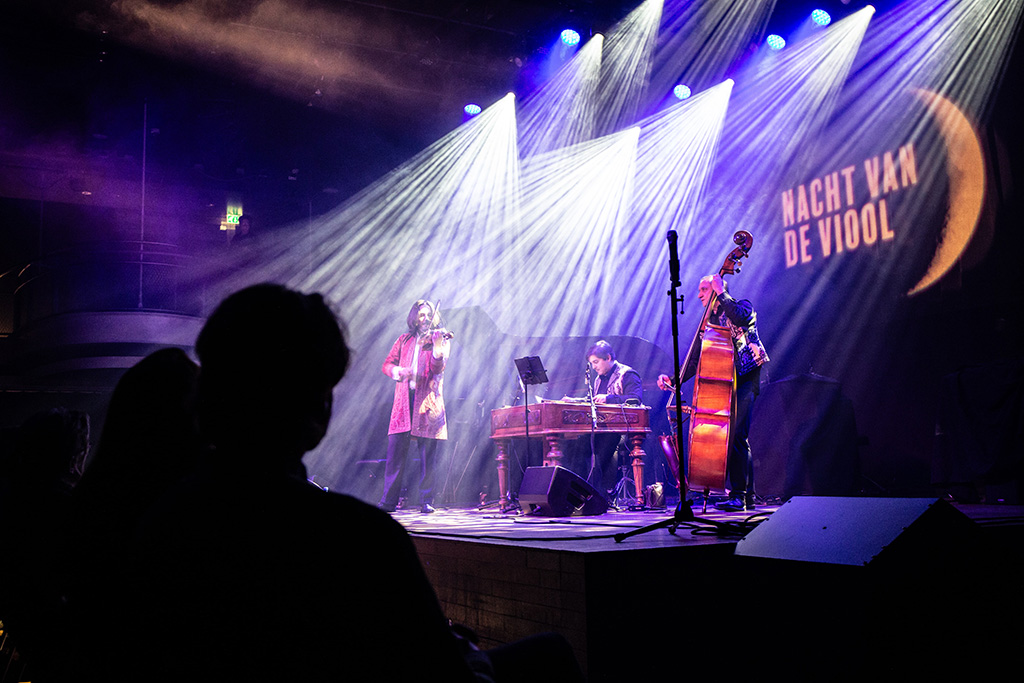
‘That’s exactly the point! But of course, you need to think about how you present it. So this year’s theme is the crossover between classical roots and pop, between jazz and global, and between young talent and established names. The line-up includes, for example, Emine Bostanci on kemenche, a Turkish violin that you play standing upright on your lap. The western violin was designed in the 16th century and hasn’t changed since. But the kemenche has been around for far longer. And the composer Peter Broderick, who started out as a violinist and evolved into a sort of indie rock artist, is writing a new piece for first-year string players at the Conservatorium van Amsterdam. He has Irish roots and a deep connection with traditional Irish music.’
Which concerts are an absolute must?
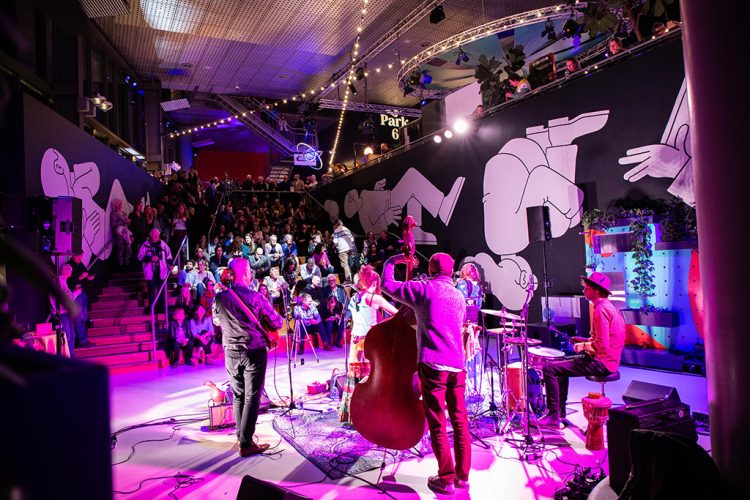
‘Session A9. A Scottish super group that plays traditional Scottish music. It’s a unique, first-time experience here in the Netherlands. Four musicians play acoustic violins with amplification, with an unbelievable groovy rhythm section. They’re playing in the Pandora hall and this band makes it feel like a rock concert, but with violins. I just love what they do. So that’s my highlight. I’m also looking forward to the great Mash-Up at the end of the evening. It’s one big jam session with all the musicians and backing artists, and I’m conducting. Last year, we had 24 violins, a few guitars, two bass guitars and a piano. They all play together, it’s amazing. And it’s the living proof that styles don’t necessarily divide us; they can also unite us.’
30 January 2026, TivoliVredenbrug
 Lees in het Nederlands
Over dit artikel
text:
Karen Duking
images:
Melle Meivogel
Publication date:
9 December 2025
Magazine edition:
UITagenda Utrecht dec/jan 2025