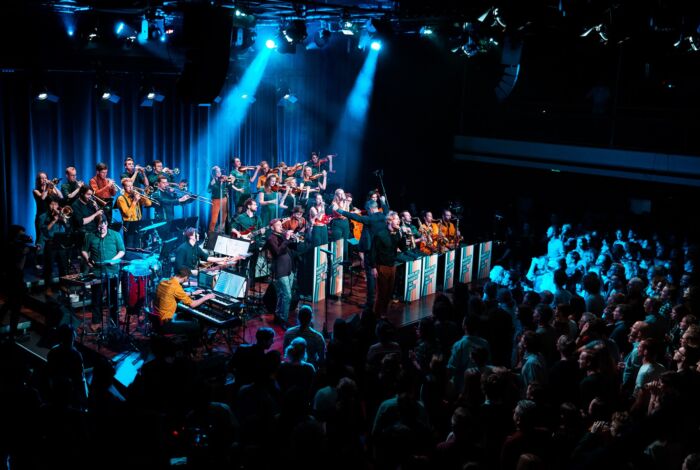
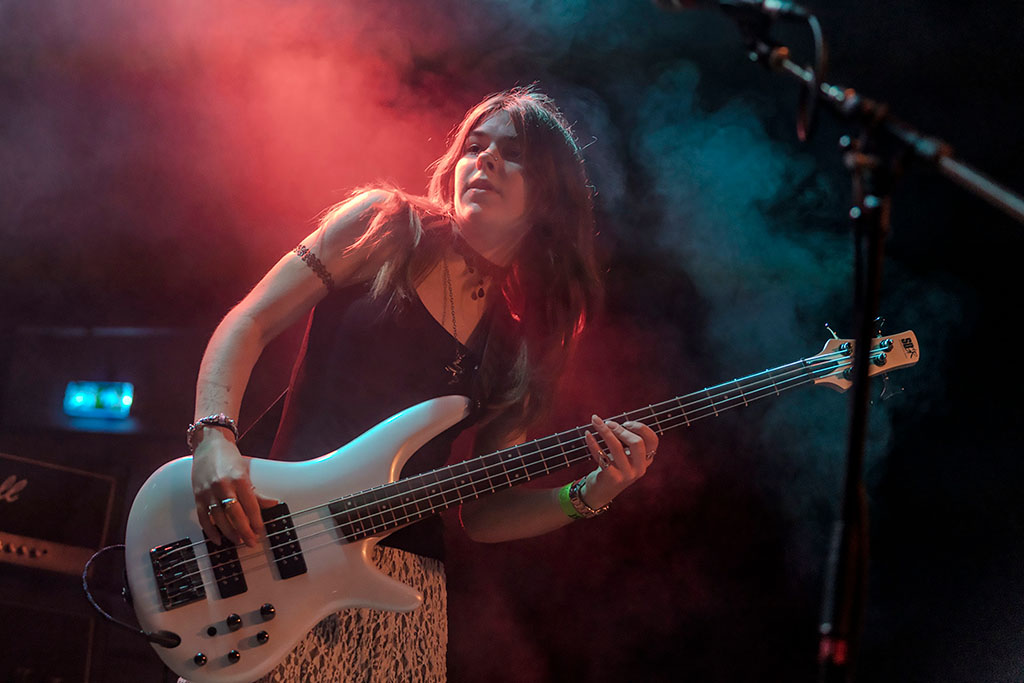
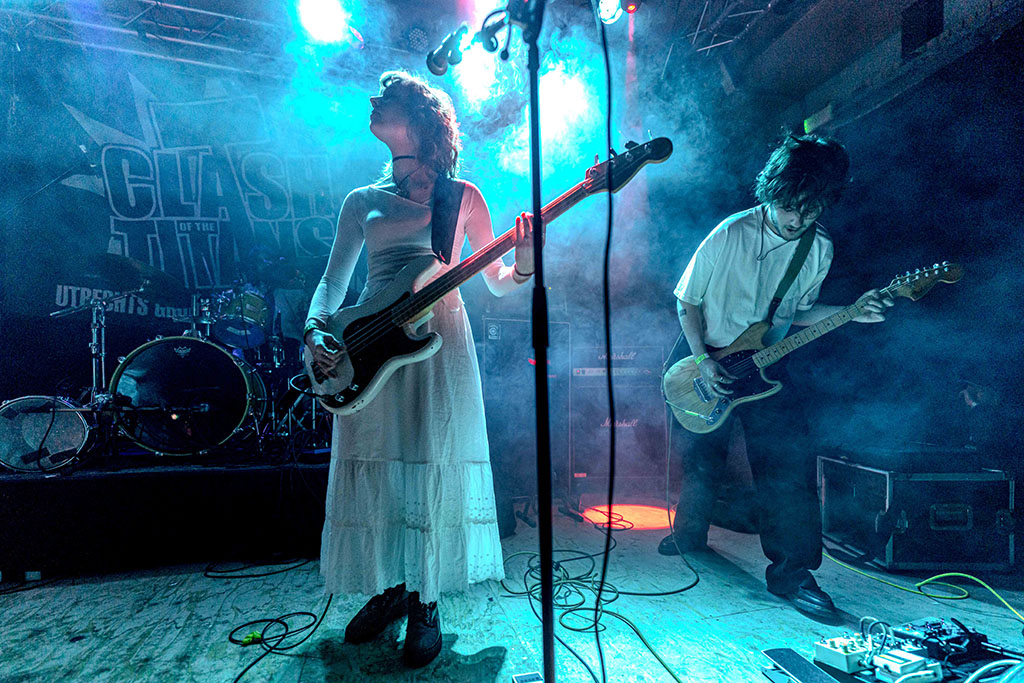
Preparations for the annual Utrecht band contest Clash of the Titans are in full swing. In eight heats, forty very different bands will compete for a place in the final. ‘Some of them have already produced a complete album, while others just have an Insta-reel lasting 25 seconds.’
The Clash of the Titans dates back to 1998, when the contest was set up for bands that rehearsed in the dB’s rehearsal studios (then on Jekerstraat). Since then, the Clash has developed into the biggest band competition in the city and province of Utrecht, boasting well-known winners (and non-winners) including We vs Death, Handsome Poets, de Stropstrikkers and more recently, bands like Bowl and FIT.
Lenny Kouwenberg is head of production at Stichting Ruis, the organisation that runs the Clash of the Titans. ‘The Clash continued to grow, with more bands, some of which played at other venues in the city, like ACU, Ekko and De Helling. But everything is back at dB’s now’, she explains.
Utrecht link
The initial idea was to give a podium to small, unknown bands, says Lenny. There are two conditions for taking part: you must have a connection with the province of Utrecht, and the band must play its own material. ‘The link with Utrecht is reasonably flexible: it’s fine if just one band member lives in the city. The main difference with other band contests is that we don’t have an age limit.’
This year, we had 57 entries. We allow 40 bands to take part in the heats. Lenny and a dB’s employee, who is also a musician, make the selection. ‘He concentrates on the band’s musicality, and I focus on the innovative or unexpected aspects. I love bands that stray off the beaten track. But it can be a difficult decision. Some bands have already produced a complete album, while others just have a self-made video of their rehearsals or a 25-second reel on Instagram.’
Coconuts
Diversity is a decisive factor in the final selection, although annual trends are also visible. Three years ago, post-punk was the vibe, two years ago it was stoner rock and last year, shoegaze. Lenny: ‘This year there’s a surprising amount of psychedelic, jazz and music with influences from the Levant region. This is good. We don’t want to programme 40 alternative rock bands, so acts with a different repertoire have an advantage. In principle, every genre is welcome, including Dutch-language bands or schlagers. I also try to add a few what the fuck bands to the mix. At the end of the day, you want bands that will make you sit and pay attention when they come on stage.’
However, she admits that having all these different genres makes the jury’s job very hard. ‘It’s not so much comparing apples with pears, as comparing apples with pears, coconuts, pineapples and a bunch of grapes.’ The jury often finds it difficult to agree. They have a few fixed criteria to fall back on: musicality, originality, stage presence and potential. ‘We also try to make the jury itself as diverse as possible, so it includes bookers, musicians, journalists, music teachers and keen concert-goers. They give both positive feedback and points for improvement. But they never denigrate the bands, some of which are just novices. The aim is to be constructive and help them on their way.’
Utrecht link
The initial idea was to give a podium to small, unknown bands, says Lenny. There are two conditions for taking part: you must have a connection with the province of Utrecht, and the band must play its own material. ‘The link with Utrecht is reasonably flexible: it’s fine if just one band member lives in the city. The main difference with other band contests is that we don’t have an age limit.’
This year, we had 57 entries. We allow 40 bands to take part in the heats. Lenny and a dB’s employee, who is also a musician, make the selection. ‘He concentrates on the band’s musicality, and I focus on the innovative or unexpected aspects. I love bands that stray off the beaten track. But it can be a difficult decision. Some bands have already produced a complete album, while others just have a self-made video of their rehearsals or a 25-second reel on Instagram.’
Coconuts
Diversity is a decisive factor in the final selection, although annual trends are also visible. Three years ago, post-punk was the vibe, two years ago it was stoner rock and last year, shoegaze. Lenny: ‘This year there’s a surprising amount of psychedelic, jazz and music with influences from the Levant region. This is good. We don’t want to programme 40 alternative rock bands, so acts with a different repertoire have an advantage. In principle, every genre is welcome, including Dutch-language bands or schlagers. I also try to add a few what the fuck bands to the mix. At the end of the day, you want bands that will make you sit and pay attention when they come on stage.’
However, she admits that having all these different genres makes the jury’s job very hard. ‘It’s not so much comparing apples with pears, as comparing apples with pears, coconuts, pineapples and a bunch of grapes.’ The jury often finds it difficult to agree. They have a few fixed criteria to fall back on: musicality, originality, stage presence and potential. ‘We also try to make the jury itself as diverse as possible, so it includes bookers, musicians, journalists, music teachers and keen concert-goers. They give both positive feedback and points for improvement. But they never denigrate the bands, some of which are just novices. The aim is to be constructive and help them on their way.’
 Lees in het Nederlands
Over dit artikel
text:
Machiel Coehorst
images:
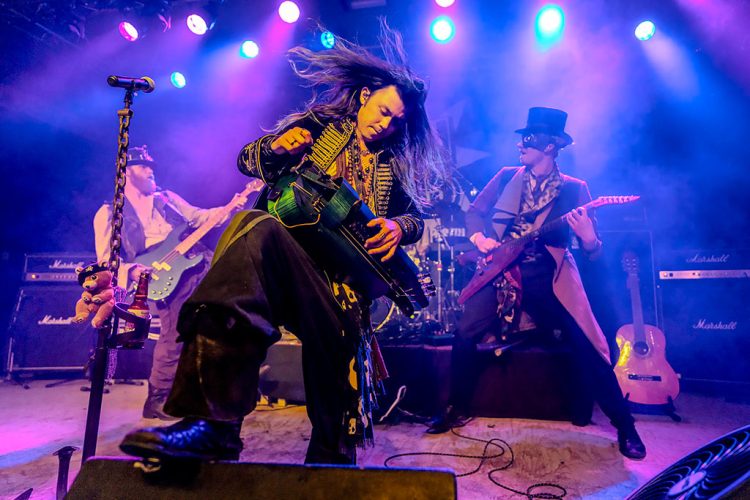
Captain Kelphair & The Saly Seaman (header) © Reinier van Olderen
Publication date:
6 February 2026
Magazine edition:
UITagenda Utrecht februari 2026