

Khadija El Kharraz Alami: SHRINE
 Lees in het Nederlands
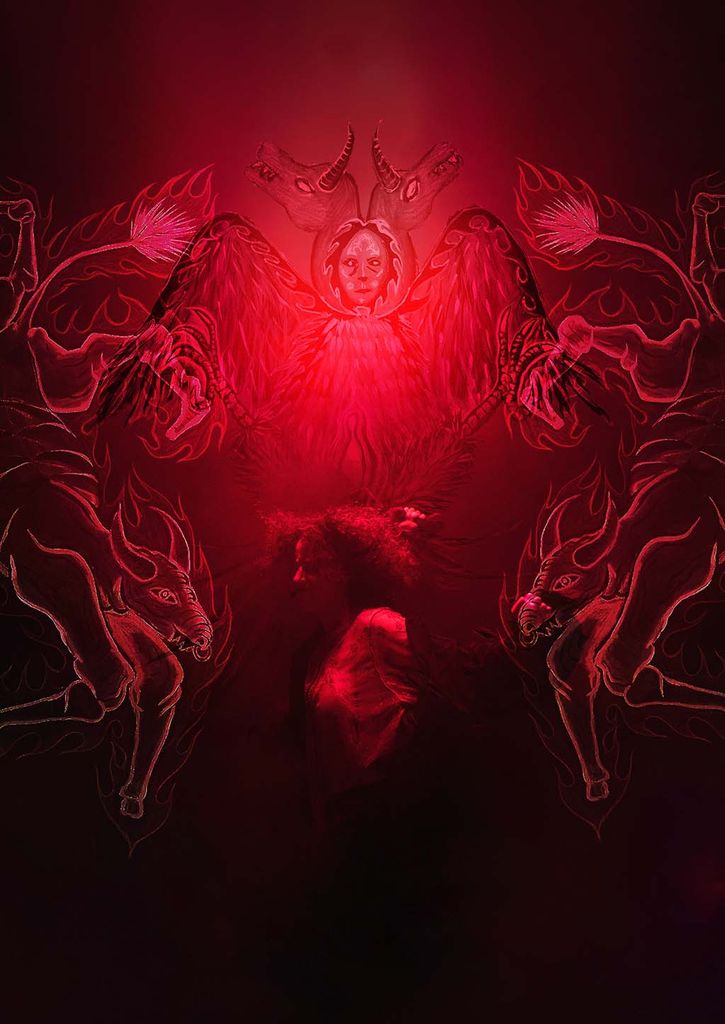
A compelling performance about grief, rage, and radical resistance. After her mother is brutally murdered by ‘the system,’ the battle-worn daughter seeks refuge with the Jinns—non-human beings from a parallel world. In their SHRINE, her feelings are given the space to exist. It is a place of remembrance, prayer, sacrifice, and celebration. El Kharraz Alami takes us into a world where past, present, and future converge.
SHRINE is an immersive theatre performance by Khadija El Kharraz Alami in which grief, anger and resistance take shape within a ritual space. The work follows a female reimagining of the classic character Alceste, who witnesses the violent death of her mother at the hands of systems upheld by people and power structures. For years, Alceste seeks justice through official channels, only to encounter silence and obstruction. When recognition and accountability remain absent, she searches for other ways to give meaning and agency to her grief and anger.
In SHRINE, Alceste finds refuge in a parallel world, a sanctuary inhabited by non-human beings who offer protection and care. Within this shrine, grief and anger are not suppressed but honoured through acts of remembrance, prayer, song, offering and celebration. The space becomes a collective shelter, where emotions are shared and transformed.
Drawing on North African traditions, feminist thought, including the work of Silvia Federici, and Molière’s The Misanthrope, El Kharraz Alami reimagines the character of Alceste through the perspective of a woman. By doing so, she questions historical and contemporary structures that have marginalized women and erased their roles within society.
SHRINE explores how injustice becomes embedded in the body, and how collective ritual can open pathways toward strength, solidarity and re-imagination. The performance invites audiences into an experience that is both intimate and political: a space to reflect on loss and resistance, and to consider which silenced voices might still be revived, and which buried cries may yet be heard.
Info & tickets
Info & ticketsPractical information
Stadsschouwburg UtrechtLucasbolwerk 24
3512 EJ Utrecht View location

More inspiration in Utrecht
| Date | Fri 29 May |
|---|---|
| Time | 20:00 |
