The Maté Nacht art café in Overvecht is an opportunity for a highly diverse audience to come together to enjoy film, music, workshops and, of course, a cup of maté. Forget achievement; it’s about slowing down, creativity and genuine connections.
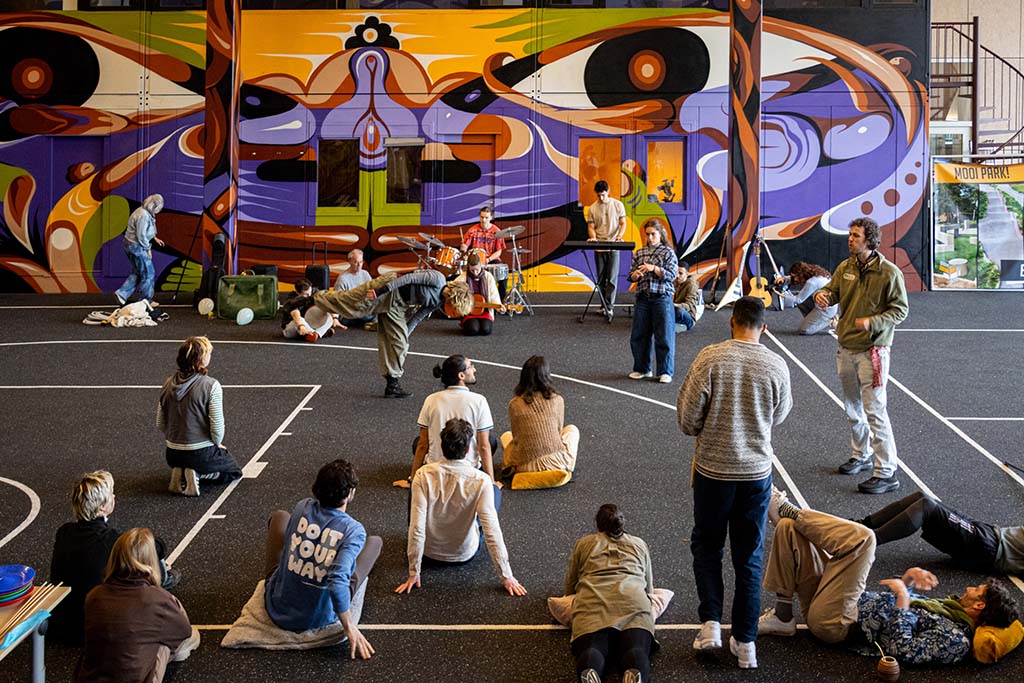
If you walk past the glass wall of the Younity Utrecht sports and culture hall in Utrecht on any evening during the week, you’ll probably see basketball players or acrobatic breakdancers. Not this Saturday. As the first visitors arrive at the building early in morning, they’re greeted by the aroma of Syrian food, the sultry sounds of soul music and their hosts, Damir Boeren and Ali Taifour. These two met at Younity Utrecht, where they now organise Maté Nacht, an art café held every first Saturday of the month featuring film, music and workshops.
Sacred status
Ali is a Syrian film and theatre maker and graphic designer, who works under the name White Hole Studio. Damir is a multidisciplinary entrepreneur, engaged in circus, dance and music. He calls himself ‘a real city boy’. Their partnership attracts a highly diverse audience to Maté Nacht. Despite the fact that the art café is mainly held during the day, the name ‘night’ was chosen to symbolise moments of rest, when people escape the day-to-day commotion and take time to connect with each other. Damir: ‘You’re finished with the daily grind. You come here to slow down, charge your batteries and drink maté together.’
Maté (actually yerba maté) is much more than bitter tea made from green leaves containing caffeine. The plant originates from Latin America, where it has an almost sacred status on account of the energy it provides. Drinking maté is all about connecting and it’s often accompanied by
a ritual in which the cup is refilled and passed around. Damir and Ali have incorporated this concept into their Maté Nacht: people refill each other’s cups and get talking to strangers.
Invisible grass
It’s still a bit fresh outside, but the warm spring sun is shing through the glass wall of Younity. It gets busier and more fun as the afternoon goes on. All kinds of languages are being spoken, from Dutch and Arabic to Russian and Spanish. You can get Syrian and Lebanese food in the corner, but there’s no alcohol.
Damir and Ali want their cultural café to serve as an open, safe meeting place, a place where you come together to create art in freedom, without pressure or rules. Damir gives a Mixed Performance Arts workshop, for example, where participants work with circus objects and musical instruments. ‘We go in search of our own artistic language,’ says Damir. ‘It’s way of discovering your creativity without having to be the best.’ He developed Mixed Performance Arts himself, he explains: ‘It’s a type of performance in which music, movement and expression come together, and everyone can take part in their own way.’
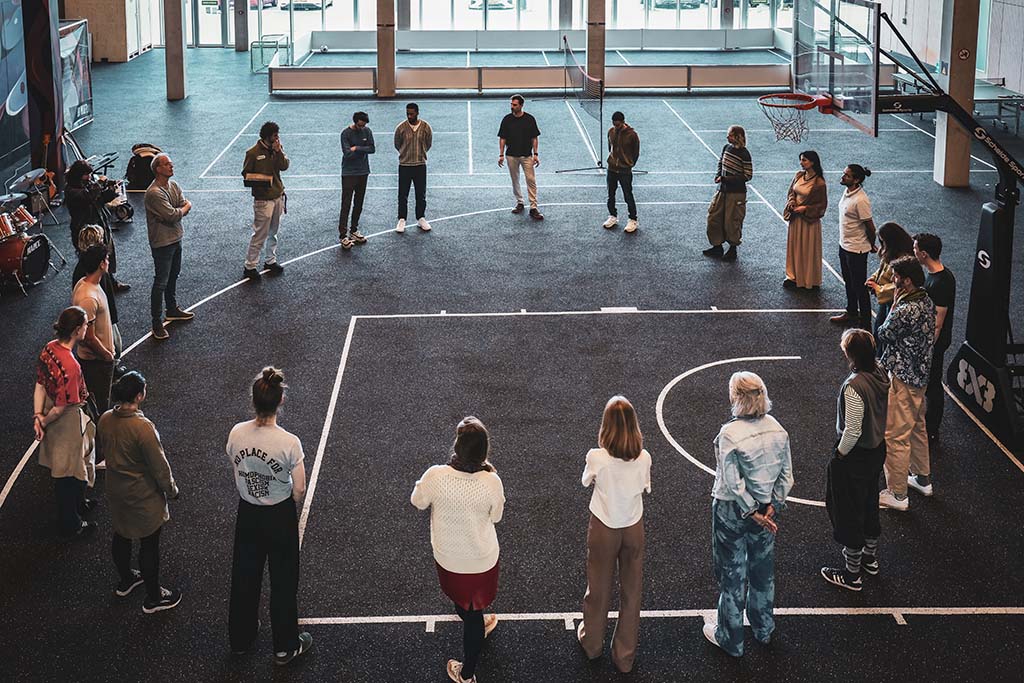
The theme of this workshop is ‘Through the long grass’. As soon as the music begins, people automatically start improvising. Two participants roll towards each other, pretending to fight their way through the invisible grass. Despite an initial awkwardness, they soon start to relax. The entire group joins in and the result is a performance in which nobody is in charge, but everyone is involved.
Cultural differences
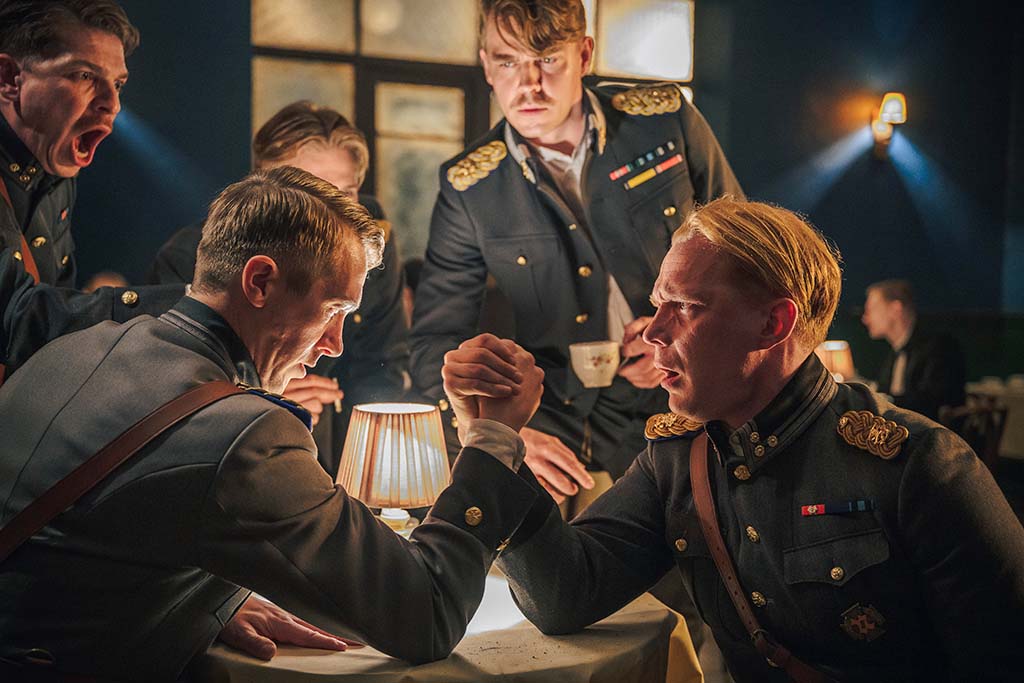
During this Maté Nacht, Ali shows his latest film, Between Vodka and Stroopwafel. The room is quiet; you hear the odd laugh and see people nodding in agreement. Most of the film was shot in Younity and it tells the story of a young Russian man, played by Kirill Uvarov, who has just arrived in the Netherlands and is struggling with the cultural differences. Ali: ‘The crew members didn’t all speak the same language, but we still managed to create something. I’m very proud of this. It’s also a personal story for me, recounting many of my own experiences in the Netherlands.’
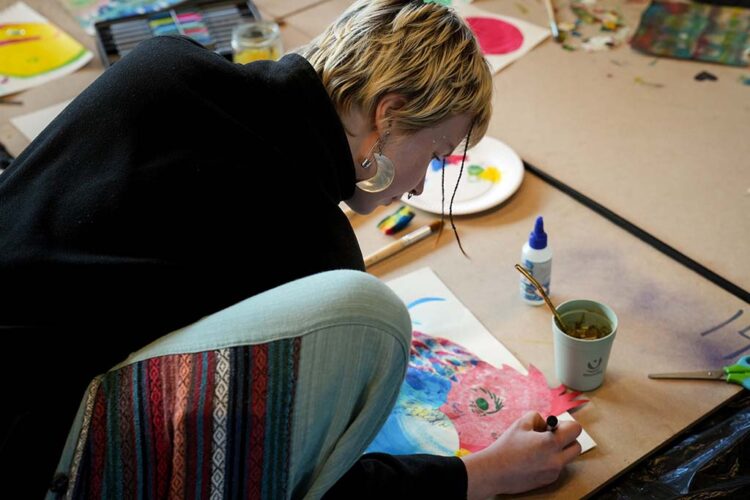
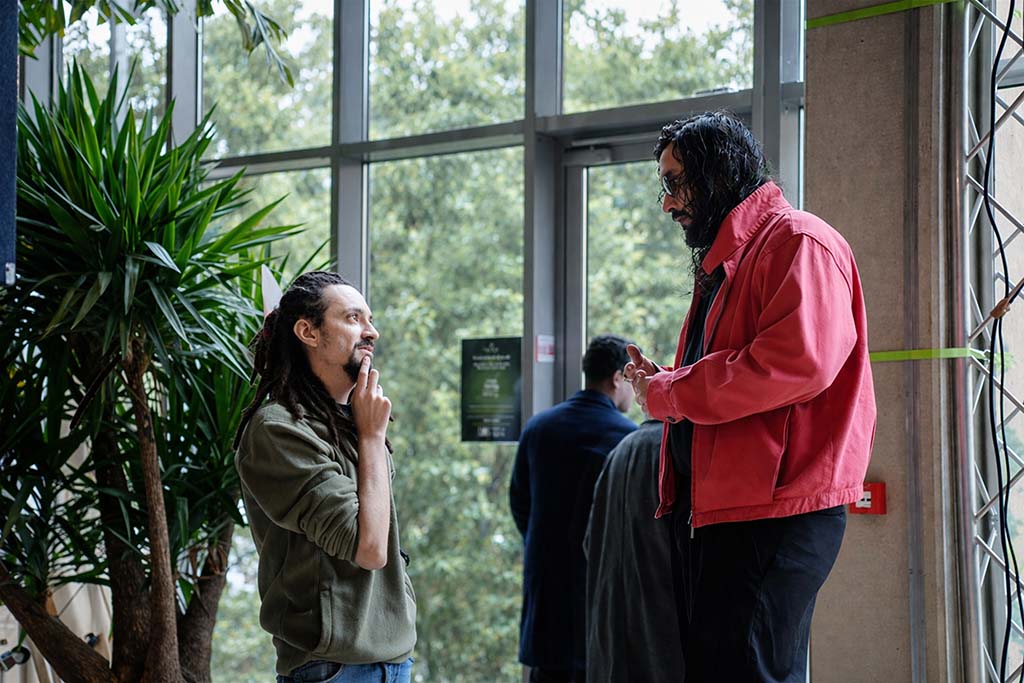
The audience at Maté Nacht comes in all shapes and sizes: children, adults, locals, newcomers. A mother and her two sons are sitting at a table drawing. Twenty-year-old Jan Poolen is a regular visitor to Younity; he comes to practise juggling. ‘I don’t normally come into contact with people from other backgrounds,’ he says, ‘but it’s just how it works here.’
Pay what you can
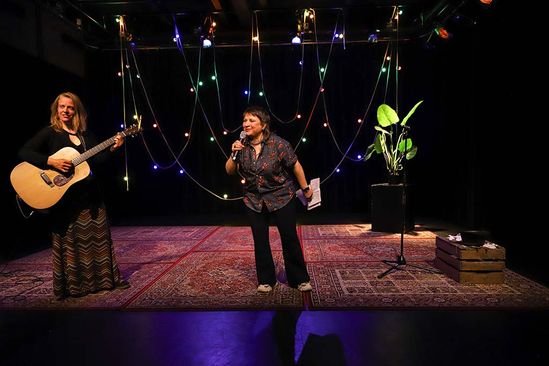
Later that afternoon, the band starts playing. It comprises the German-Syrian singer, composer and oud player Joseph Shami, the Canadian-Lebanese guitarist Salim Zahra and the German-Indian Dennis Netto on the synthesizer. They’re currently on a world tour with their project Warak Sham. People are dancing, and some are sitting with their eyes closed listening to songs about identity, transformation or memories.
Maté Nacht fits in well with the Younity Utrecht vision, which describes itself as an urban sports and culture hall, where young people can work on their personal development. An important aspect: it’s free. Maté Nacht works on a pay what you can basis, which makes the event a logical continuation of the ongoing Younity Utrecht concept: enabling connections that develop into new ideas, which are eventually become a permanent fixture.
Every edition of Maté Nacht is based on five constant elements: the café, the art studio, a literature corner, Mixed Performance Arts and the stage. Every month features different items, resulting in new partnerships between makers, local residents and initiatives from within and outside the city. Something that starts with a simple cup of maté can develop into a lively meeting bursting with discussions, art and inspiration. To quote Damir: ‘We’re not out to achieve anything, but to forge genuine connections.’
 Lees in het Nederlands
Over dit artikel
text:
Cristel Brandt
images:
Angel Asso
Publication date:
8 June 2026
Magazine edition:
UITagenda Utrecht juni 2026