What can you start with a simple handshake? In Hugs & Handshakes, the THERE THERE Circus Company explores how touch, trust and partner acrobatics can help people to connect. And there’s audience participation for anyone who wants to join in.
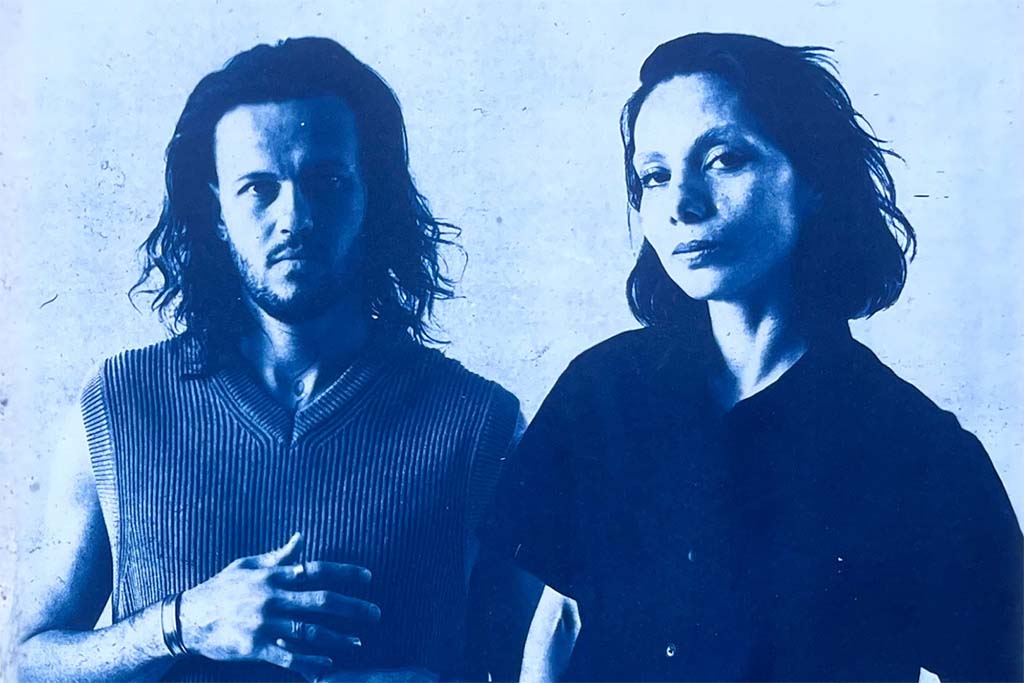
Having met outside the circus world, the Flemish Hanna Mampuys and Toon van Gramberen began a relationship and started doing acrobatics together. They’ve worked as partner acrobats since 2012, and founded the THERE THERE Company in 2016. They use partner acrobatics to tell stories based on subjects like trust, care and connection.
The idea for Hugs & Handshakes came during a tour with a previous show, Carrying My Father, which featured Toon and his father on stage together. It was about giving and accepting support, and the way that the relationship between father and son gradually changes. ‘Thanks to the show, I had much more physical contact with my father. It really strengthened our bond’, says Toon. Hanna: ‘It got us thinking about the level of touch and trust you need for acrobatics, and what you can achieve with it.’
Hug
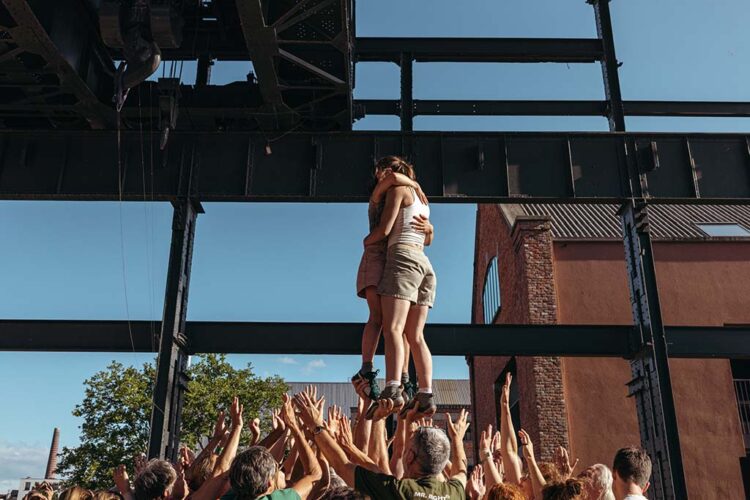
‘For example, if someone stands on someone else’s shoulders and lets themself fall backwards, the rest of the group must catch them’, Toon explains. ‘You’ve not only performed an acrobatic exercise together, but you’ve also shared an experience that goes beyond a trick or acrobatic shape.’ Hanna: ‘It automatically generates a social aspect. We wanted to share this experience by involving the audience.’
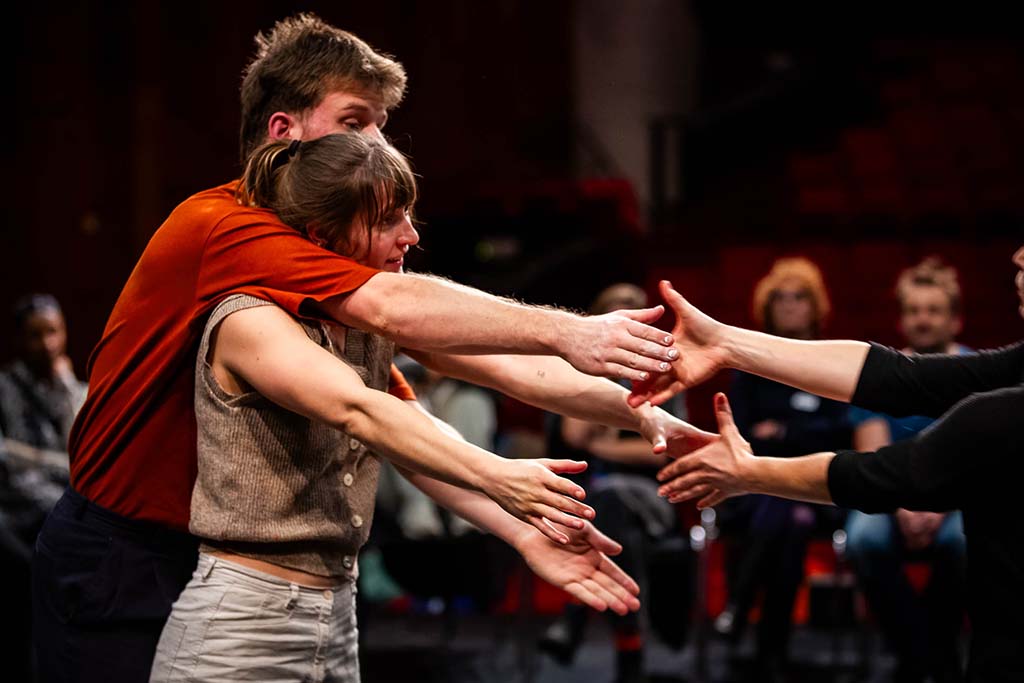
So that’s what they do in Hugs & Handshakes, which is performed by five acrobats in a circle. They first make contact by shaking everyone’s hand. Like hugs, handshakes are an accepted form of human contact. These are movements that constantly feature in acrobatics. ‘A hug, for example, can eventually become a way to catch someone,’ Hanna explains. ‘In the show we use these day-to-day activities as physical material, making them increasingly complex, but still recognisable as hugs and handshakes.’
Human pyramid
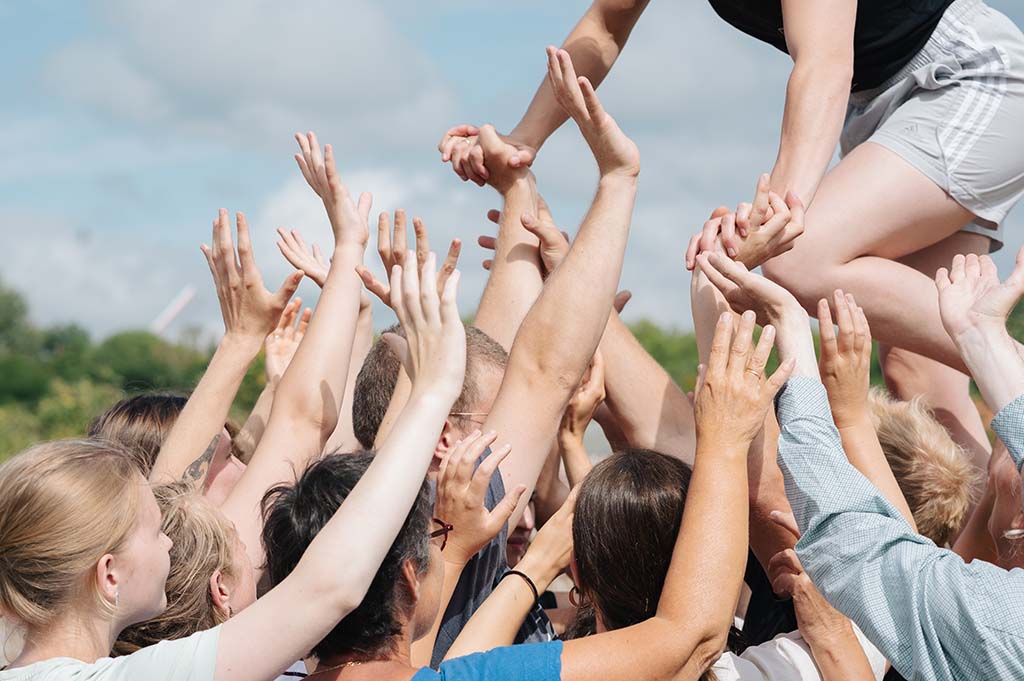
The acrobats invite the audience to join in. It starts on a small scale: one of the performers reaches out to someone, creating short acrobatic movements. Visitors are invited onto the stage one by one, and can take part in exercises like building a human pyramid, for example. However, the entire show doesn’t revolve around participation. The acrobats themselves are pivotal, and the audience is sometimes part of the choreography. The makers want to create a natural transition from watching to taking part. ‘Consent is very important’, Toon is keen to stress. ‘We understand that it can be stressful for some people, so we always make it clear that everything is entirely voluntary’ Hanna: ‘It can be difficult to make contact with someone you don’t know, but it can also be fun. We actively try to desexualise touch in our show. We’re not touching each other to express intimacy, but to carry or catch someone, for example.’
Powerful instrument
‘Touch is important for our well-being’, Toon continues. ‘We saw how important it was during the COVID-19 pandemic. Hanna and I were unable to perform, and we couldn’t train together either.’ Hanna: ‘The basis for our work disappeared, but so did the emotions you feel when you see other people touching each other.’ Toon: ‘After the pandemic, we realised that partner acrobatics was a powerful instrument to help restore people’s faith in physical contact. For example, we say: try to climb onto my shoulders. We perform an acrobatic movement together, while simultaneously creating trust and connection.’
You don’t have to be acrobatic to take part, say Toon and Hanna. ‘You don’t need any experience at all. You just need to be a person. The more diverse the audience, the more fun everyone has.’
20 November 2026, Podium Hoge Woerd
 Lees in het Nederlands
Over dit artikel
Publication date:
6 November 2026
Magazine edition:
UITagenda Utrecht november 2026