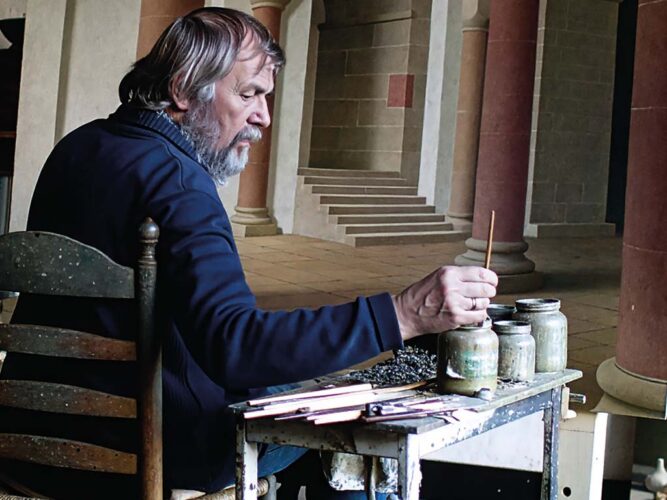
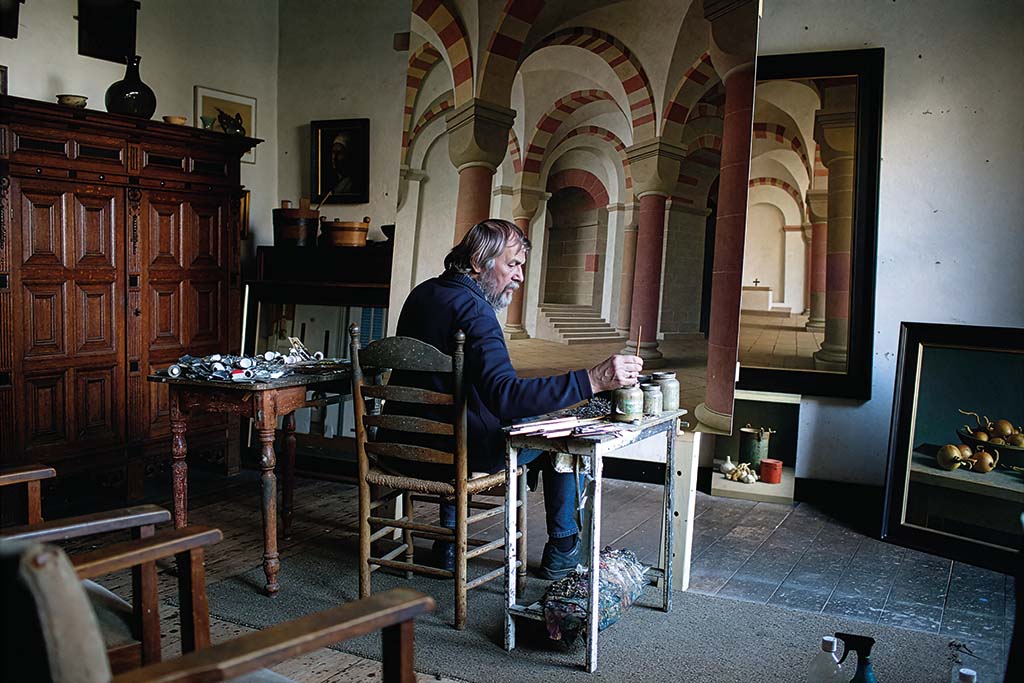
At 81 years of age, Henk Helmantel still works every day in his studio in the village in Groningen where he was born. He paints still lifes and the interiors of monasteries and churches. He’s produced over 1,000 paintings, some of which are now on display in Museum Catharijneconvent.
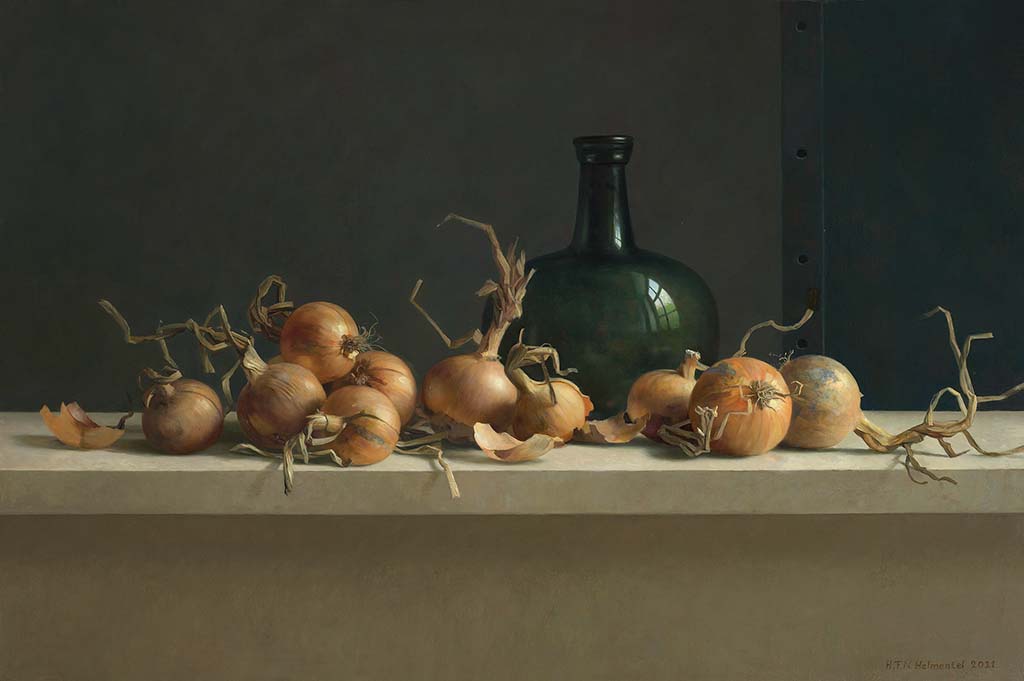
Helmantel is renowned for the serenity of the still lifes and interiors he paints and his characteristic use of light. His oil paintings manage to convey the true beauty of everyday objects. He lives and works according to his Christian principles, although none of his paintings are explicitly religious or biblical. They do, however, convey his awe and reverence for the richness of creation. Helmantel considers it his calling to show the beauty and glory of worldly goods in terms of composition, light, colour and atmosphere.
All his paintings stem from his attentive focus on reality. ‘I’m led by my own observations of objects and interiors, Helmantel explains. Having said this, his aim isn’t to produce a carbon copy of every detail. ‘As a painting progresses, it’s as if reality becomes less important and the painting itself takes over. You shape the subject in your own way, as it were.’
Fruit & vegetables
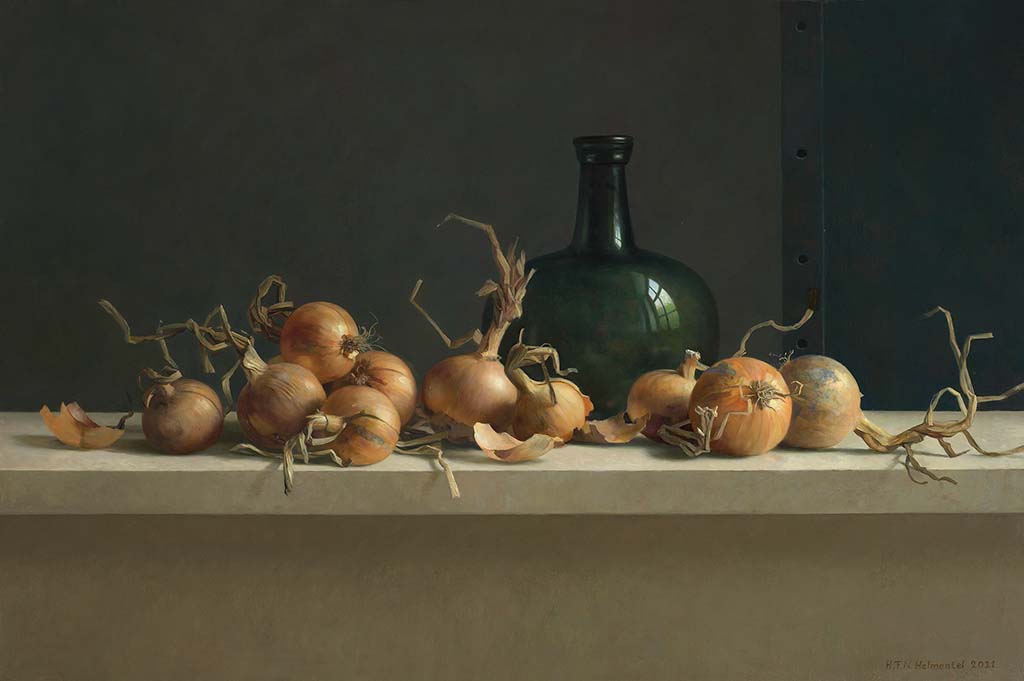
The artist has never felt inclined to leave his home village. ‘If it’s not happening here, I can’t imagine that it would be anywhere else.’ He collects the objects for his still lifes, often fruit and vegetables, in his studio. ‘When the time comes, I get restless and go into the garden, or a greengrocer or market to look for fruit that interests me.’ Or he dips into his collection of archaeological objects: Roman glass and Chinese bronze, antique cupboards and tables, shells and ancient everyday utensils, such as chests, scales, pots, jugs, bowls, bottles and vases. The visible signs of wear and tear give these items character, says Helmantel, which is why he considers a jaded bowl more interesting than a new one.
He’s more interested in the interaction between shape, colour and light than in the objects themselves. Which colours match? How do the objects relate to each other? Where do they catch the light? He spends time making good combinations, and sometimes shifting and moving things. The first attempt is often the best, but sometimes a small change is required as the painting progresses.
Helmantel-red
Although his work is figurative, Helmantel thinks that his application of shape and colour also has an abstract quality. Take the patches of red that regularly feature in his paintings – also known as ‘Helmantel-red’. ‘A red element draws your attention: it’s usually the first thing you look at.’
His still lifes are often compared with those of the 17th-century masters due to similarities in technique, the attention to textures and the incidence of light. But, he says: ‘When you compare those still lifes with my work, you see a completely different mentality.’ Helmantel has an endless variety of colours at his disposal and he chooses to paint plain objects from everyday life, aiming for simplicity and austerity, whereas the classic, showy still lifes tend to feature more extravagant items.
New light
After countless exhibitions in the Netherlands and abroad, from the United States to Indonesia, his work is now being exhibited in Museum Catharijneconvent. For this exhibition, entitled Henk Helmantel. In a new light, he and his wife selected work from the museum collection and their own personal collection of art and utensils. They went through the depot together, examined the pieces already on display and made personal choices.
The juxta-positioning of his paintings, his collection and the mediaeval items from the museum collection all go to make this a very special exhibition. A 15th-century group of Gethsemane statues from Catharijneconvent has been placed next to a similar group from Helmantel’s private collection, for example. ‘It’s the same theme (Christ praying in the Garden of Olive Trees, surrounded by sleeping disciples Peter, John and Jacob, ed.), and both are moving and very high-quality, but they have still been produced differently.’ The same applies to a portrait bust of possibly John the Apostle from his own collection, which is positioned next to a similar bust from the museum collection.
Utrecht churches
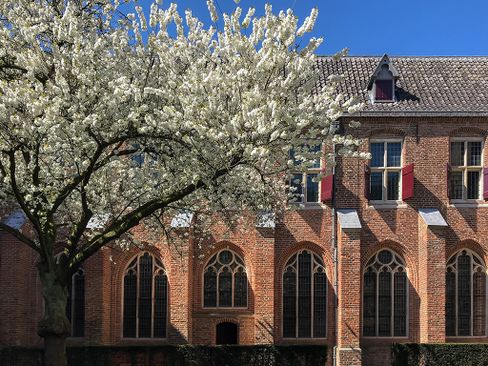
The religious angle in Helmantel’s work and the collection is well-suited to Museum Catharijneconvent, a former monastery with an extensive collection of Christian heritage. The exhibition includes still lifes with a clear connection to specific aspects of the Christian faith, such as the Last Supper, the holy trinity and books that feature in the liturgy. And there’s a direct link with Utrecht: the artist painted a staggering 14 paintings of Utrecht churches. St Peter’s Church in particular has a special place in his oeuvre.
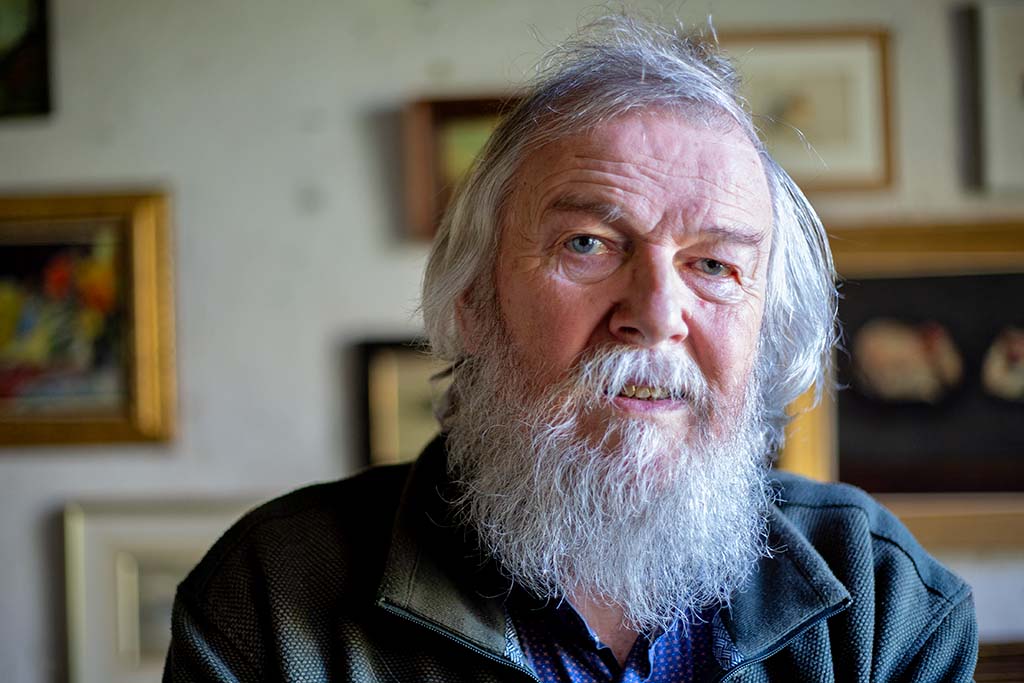
Even in his serene church and monastery interiors, Helmantel’s paintings are based on reality. He starts by making detailed sketches on location, which form the basis for the final painting. The light doesn’t have to be exactly the same as it was when he made the sketch. ‘You can add your own accents: intensify or perhaps soften the light a bit.’ In other words, he creates his own light, which is what makes a painting a typical Helmantel.
Look closely
What does Helmantel hope to arouse in visitors? ‘I hope that they’ll look closely and see the richness of creation in all its diversity. You never tire of seeing this. It never fails to fill you with wonder.’ This sense of wonder is very real to him: ‘I think this should always have a place in human existence. Losing your ability to feel awe and wonder equates with poverty, and this is something we must avoid at all costs.’ How? His paintings and the exhibition in Catharijneconvent are a good first step.
until 17 January 2027, Museum Catharijneconvent
 Lees in het Nederlands
Over dit artikel
text:
Eva Michiels
images:
Dirk-Jan Visser-Hoogeland, Peter de Jong, Art Revisited
Publication date:
2 October 2026
Magazine edition:
UITagenda Utrecht oktober 2026